
25 May 2026
The UNESCO Regional Office for Eastern Africa (ROEA), represented by Dr Patience Awopegba, and Kenyatta University, represented by Dr Damaris Kariuki, conducted a monitoring and evaluation mission for the LEAD ESD Project in Northern and Eastern Rwanda.
The mission provided an opportunity to assess the progress and impact of Education for Sustainable Development (ESD) initiatives being implemented by student-teachers and staff in participating teacher training institutions. The team visited Kirambo Teacher’s College and Nyamata Teacher’s College, where members of the community of practice shared their experiences in implementing change projects within their institutions and surrounding communities.
The projects demonstrate practical approaches to sustainability by making use of locally available resources. Among the strategies being employed are harvested rainwater, labour contributed by students and school personnel, manure generated from grass cuttings, and food waste. These approaches are helping the institutions develop sustainable practices while providing student-teachers with practical experiences that can be transferred to classrooms and communities.
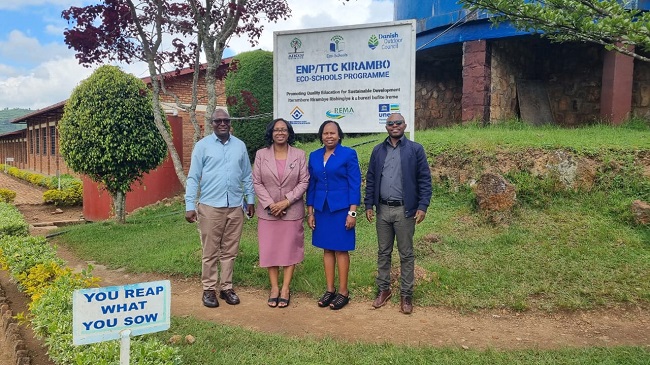
The mission was undertaken in the company of Professor Irenee Ndayambaje, National LEAD ESD Coordinator for Rwanda, and Engineer Dominique Mvunabandi of the Rwanda National Commission for UNESCO. The team engaged with the community of practice responsible for implementing the change projects and observed firsthand how the first cohort is translating Education for Sustainable Development principles into practical action.
The monitoring and evaluation exercise also provided an opportunity for participants to share feedback on the implementation process, achievements, challenges and lessons learned. The commitment demonstrated by student-teachers and staff highlighted the growing integration of sustainability concepts into teaching, learning and community engagement.
As Cohort 1 approaches its completion on 30 June 2026, the progress witnessed during the mission reflects the potential of the LEAD ESD Project to strengthen the capacity of educators to promote sustainable development in their institutions and communities.
The mission brought together key partners committed to advancing Education for Sustainable Development in the region, including Professor Irenee Ndayambaje, LEAD ESD Country Coordinator for Rwanda; Dr Patience Awopegba, UNESCO Regional Office for Eastern Africa; Dr Damaris Kariuki, LEAD ESD Co-Principal Investigator, Kenyatta University; and Dr Dominique Mvunabandi, Rwanda National Commission for UNESCO.
The team expressed appreciation to the institutions and communities for their warm welcome, constructive feedback and commitment to implementing the project. The progress recorded in Northern and Eastern Rwanda demonstrates the value of collaborative approaches in turning Education for Sustainable Development from a concept into meaningful action in classrooms and communities.
Kenyatta University remains committed to strengthening partnerships that advance Education for Sustainable Development and contribute to sustainable, resilient and empowered communities across the region.